KiMombasa
2008 debut album and homage to Swahili coastal culture.
Juma Tutu's story begins on the coast and carries the cultural memory of Mombasa into modern Afro-Jazz.
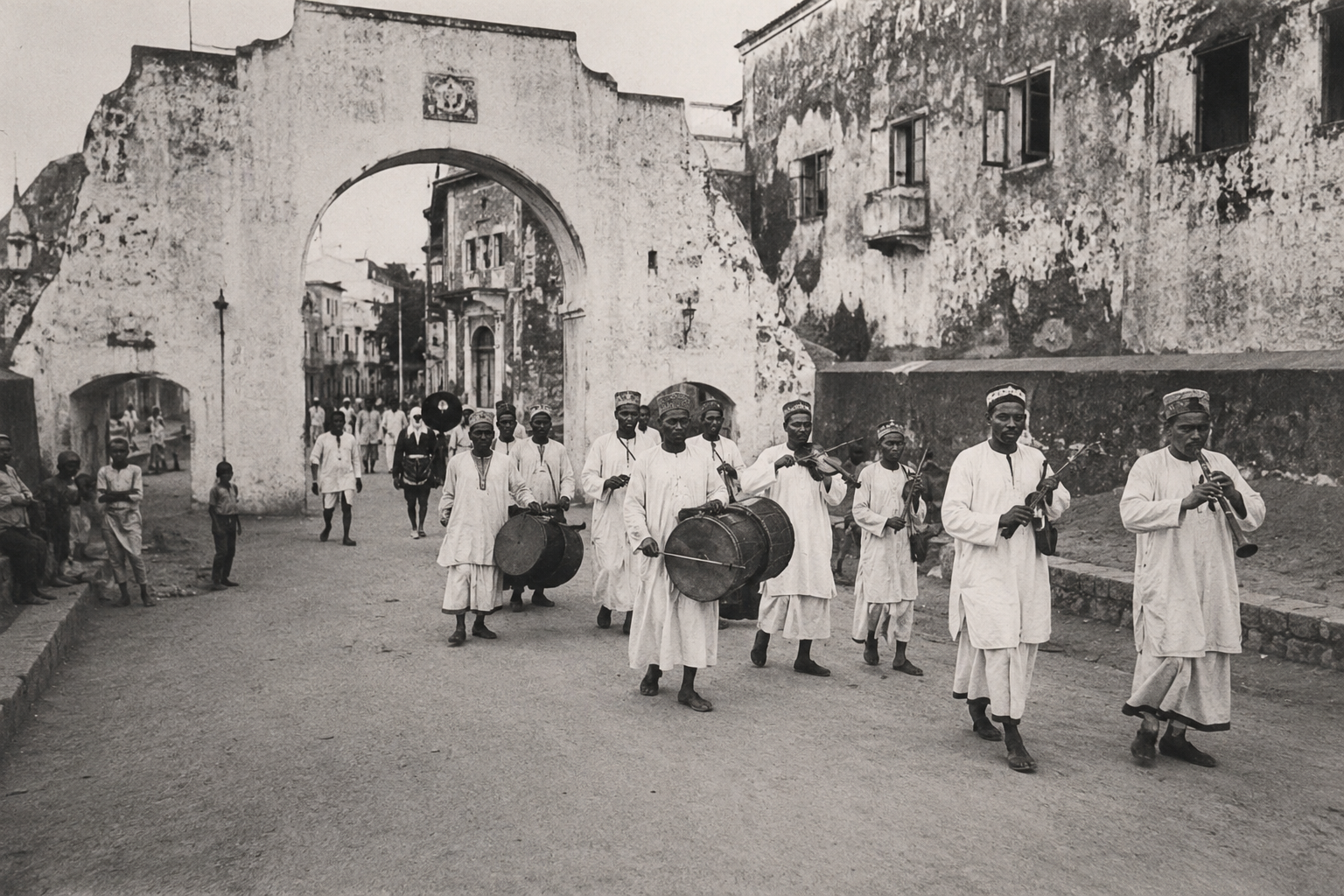
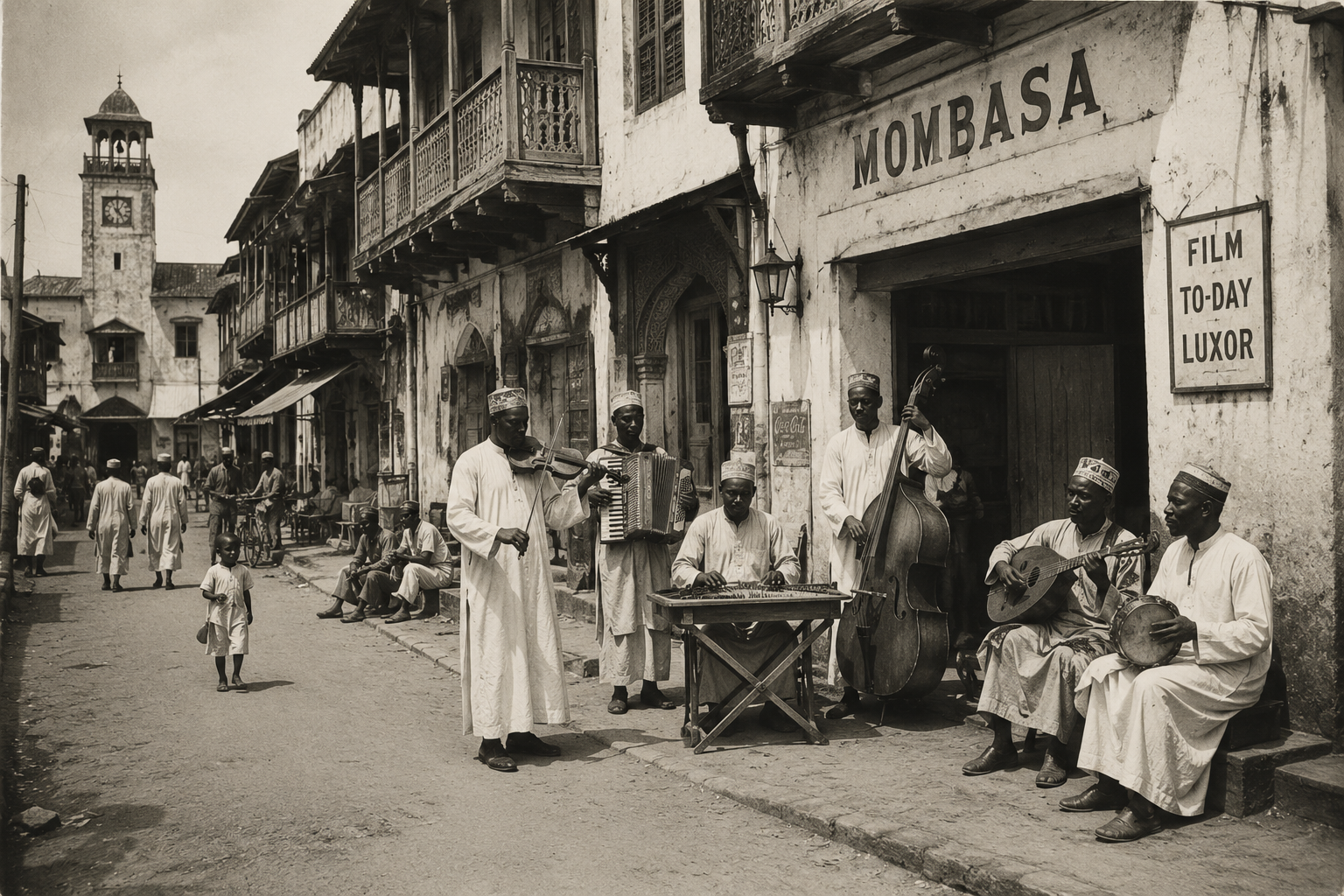
Mombasa's coast holds African, Arab, Persian, Indian and European influences that have moved through language, architecture and song for centuries. Fort Jesus, built from 1593 to 1596 and recognised by UNESCO, stands as a symbol of cultural exchange.
Kiswahili is a Bantu language shaped by Arab traders since the second century AD. By the 11th century, Swahili people and Islam were firmly established along the coast, creating the setting for the music's layered identity.
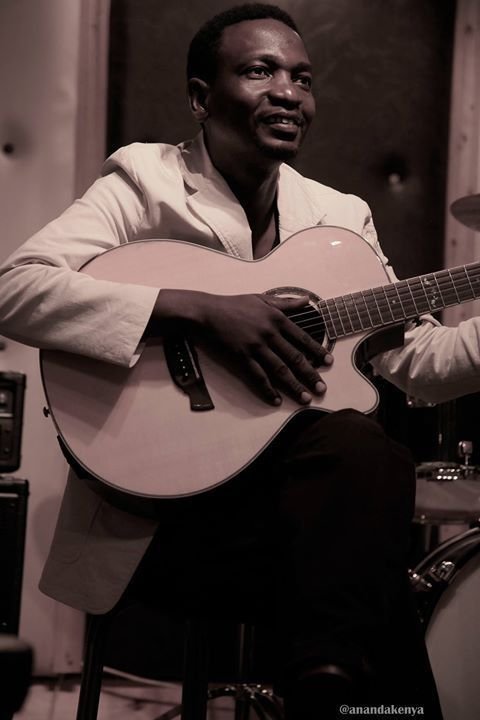
Born in coastal Mombasa, Juma was raised in the Makande and Mathare neighbourhood from 1985. His saxophone path was shaped by retired Navy officer Nashon Mganga.
In 1998, on his father's recommendation, he joined Generations Band at Serena Beach Hotel, Mombasa, and was mentored by bandleader Muhammad Amin.
In 2000 he moved to Bango Sounds under master saxophonist Mzee Ngala. In 2001 he was recruited by Them Mushrooms, then formed the Tutu Band in 2003.
The project became Swahili Jazz Band around 2012 to 2013, carrying a sound Juma describes as "a blend of native Mijikenda traditional music with Asian, Arabic and some Western influences."
"Very soothing and highly enriched with a unique sound and poetic Swahili lyrics"
2008 debut album and homage to Swahili coastal culture.
2013 live album featuring the single "Lazaro."
October 2019 third album featuring an Italian guitarist collaborator.
2018 single with South African guitarist Jimmy Dludlu, a tribute to Juma's Makande upbringing.